(From the perspective of folks who accidentally started doing it nineteen years ago).
Most conversations about sustainability are loud.
They come with signs, slogans, and lists of things you are supposed to feel bad about. They ask you to try harder, even when you are already tired.
Low-impact travel works best the opposite way.
When it is done right, it does not feel like a choice at all. It just feels normal.
Quick Answers
What does low-impact travel feel like?
Lighter. Less noise, fewer decisions, more presence.
Do guests have to change their behavior?
Not much. The systems are designed so the right choices happen naturally.
Why does Maine fit this so well?
Efficiency and durability are practical necessities here.

Sustainability When It's Not a Performance
The most sustainable places rarely talk about it much.
Not because it does not matter - but because it is embedded. When systems are designed well, guests do not need reminders. They participate naturally, without friction or fanfare.
At 1 Big Sustainable Island, sustainability is not something you opt into. It is simply how the place operates.
You do not arrive and learn rules. You arrive and follow the logic of the island.
Why Systems Matter More Than Signs
Signs ask people to behave differently.
Systems make better behavior the default.
A sign might say "please conserve resources." A system quietly nudges conservation.
This is the difference between telling and designing, between preaching and leading by example.
When lighting, water use, waste handling, and energy choices are built thoughtfully from the start, guests do not have to think about sustainability at all - they just live their days, and the impact stays low.
That is the goal.

How Guests Participate (Without Effort)
One of the misconceptions about low-impact travel is that it requires sacrifice.
In reality, it mostly requires alignment.
Guests at 1BSI participate in sustainability simply by:
- Using what's provided
- Packing thoughtfully
- Slowing down
- Following the natural rhythm of the island
No lectures. No checklists. No gold stars.
When travel is designed around simplicity, participation becomes automatic.
Maine's Quiet Advantage
Maine has always been efficient - long before the word was fashionable.
Short growing seasons reward planning. Cold winters reward insulation and durability. Remote locations reward doing things right the first time.
This practical mindset carries over naturally into low-impact hospitality. You build systems that last. You avoid waste because replacing things is inconvenient. You respect resources because you depend on them.
Sustainability here is not ideology. It is common sense.

"We Didn't Set Out to Be Trendy"
That is the honest truth.
1 Big Sustainable Island was not created to chase a movement. It was built around the reality of island life - where every decision has consequences, and inefficiency shows up quickly.
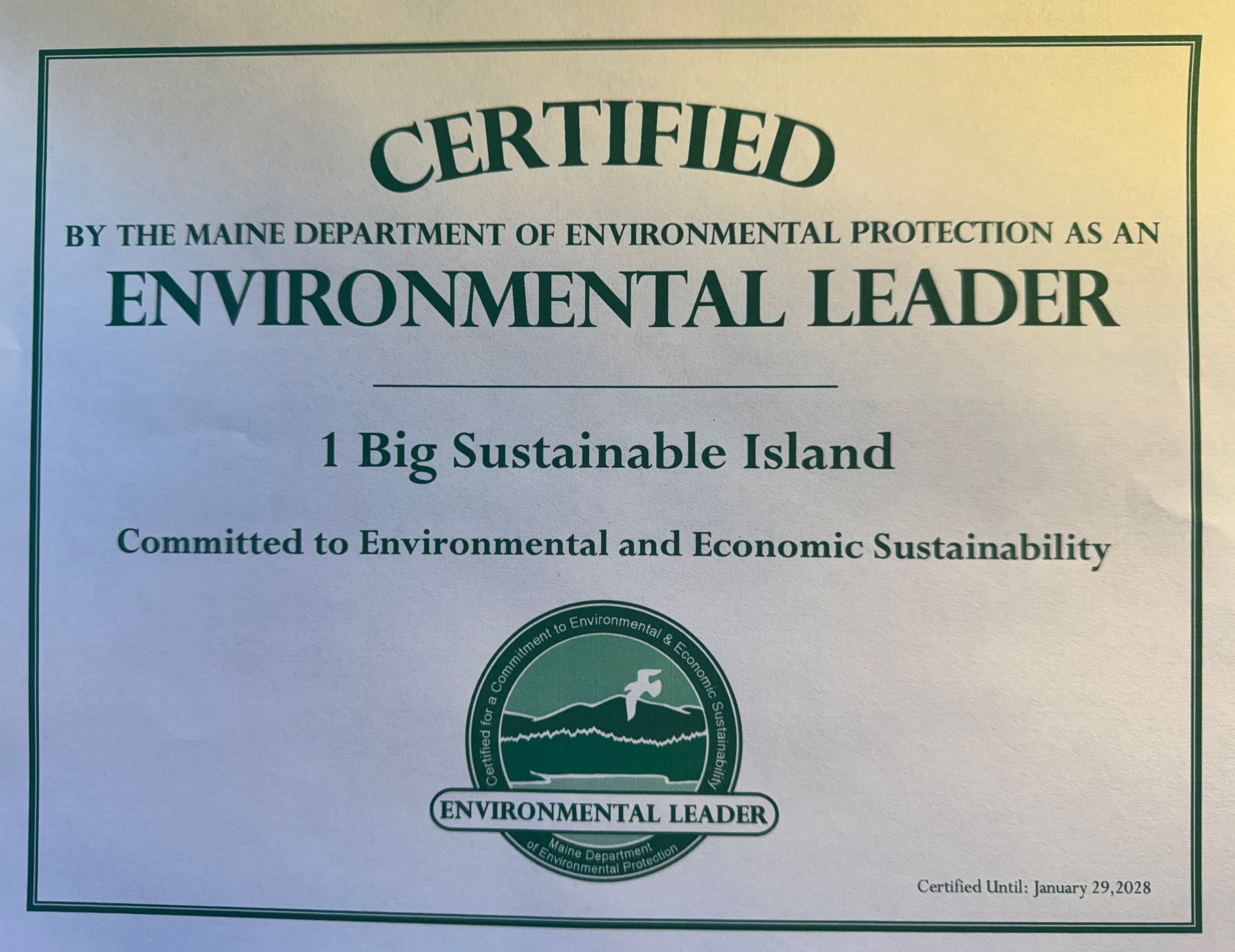
Over time, that approach has been recognized - including formal acknowledgment of environmental leadership in hospitality.
But recognition was never the point.
Doing things thoughtfully was.
What Low-Impact Travel Feels Like
Here is the part that matters most to guests:
Low-impact travel does not feel restrictive. It feels lighter.
Less noise. Less clutter. Fewer decisions. More presence.
You leave feeling restored rather than depleted - not just personally, but ethically.
That feeling tends to linger.
A Final Thought
Sustainability works best when it is invisible.
When it is woven into how a place functions instead of announced at every turn. When guests do not feel like participants in a program, but part of a system that makes sense.
Accidental sustainability is a process and not an accident at all; it's trial and error... and then (the most importand part) trial some more.
Little mistakes happen all the time. What makes 1 Big Sustainable Island tick is that we've got a good supply of questions, a healthy skeptiscism, and we rarely stop trying again.
Decades of experience at 1 Big Sustainable Island have taught us to appraoch each day making care, practicality, and patience come first - and trends show up later, if they show up at all.
Frequently Asked Questions About Low-Impact Travel
What does low-impact travel actually mean?
Low-impact travel focuses on minimizing environmental footprint through thoughtful design rather than guest effort. When systems are built well, sustainability becomes part of daily life instead of a list of rules.
Do guests have to change their behavior to be sustainable at 1BSI?
Not really. Sustainability at 1 Big Sustainable Island is built into how the island operates. Guests participate naturally by using what is provided, packing thoughtfully, and moving at a slower pace.
Is sustainable travel less comfortable?
No. Low-impact travel does not mean sacrificing comfort. At 1BSI, comfort and sustainability coexist - with real beds, hot showers, and practical amenities designed to reduce waste quietly.
Why is Maine well-suited to sustainable travel?
Maine's climate and geography reward efficiency, durability, and planning. These practical realities naturally support low-impact systems that last and perform well over time.
Is sustainability a big part of the guest experience?
It is part of the foundation, not the spotlight. Guests often notice how easy everything feels - and only later realize that the ease comes from systems designed to be low-impact.
Related Guides
On Annabessacook Lake in Monmouth, Maine — near Winthrop.

Ready to plan your overnight island stay?
Bookings go fast in peak season. We'll help you pick the right spot.